Mattress education
Organic Hybrid Beds: How Materials Shape Support and Temperature
An organic hybrid mattress is not a single material or a guarantee of a particular sleep experience. It is a layered system: comfort materials meet a supportive core, and the design choices between them shape pressure relief, responsiveness, airflow and care. Learning how those layers work together is more useful than relying on a label alone.
What makes a mattress a hybrid?
A hybrid mattress generally pairs a support core—often a set of metal coils—with one or more cushioning layers above it. Those layers may include latex, foam, wool, cotton or other fibers. The term describes a construction approach, not a fixed recipe. Two beds marketed as hybrids can differ substantially in firmness, materials, airflow and feel.
“Organic” adds another dimension, but it also needs careful interpretation. It may refer to a specific material, a component processed under a recognized standard, or a broader product claim. A mattress can include organic cotton or certified organic latex without every component being organic. The practical question is not simply whether the word appears on a label, but which materials it describes and what documentation supports the claim.
The distinction matters because a bed performs as a system. A coil unit can provide lift and space for air to move, while the comfort layers determine how closely the surface follows the body. A breathable cover can contribute to a pleasant first impression, but it cannot by itself tell you how the mattress will feel after hours of use. Construction, thickness, density, firmness and the sleeper’s own needs all count.
The layers, from the surface inward
A useful way to compare organic hybrid beds is to read the mattress from top to bottom. Each layer has a job, and the interaction among layers matters at least as much as the individual materials.
- The cover is the fabric immediately beneath the bedding. Cotton and other natural fibers may feel soft and allow moisture to disperse, while quilting can add a small amount of initial cushioning. A cover is not a substitute for the support structure below it.
- The comfort layer is designed to cushion the body and reduce pressure at areas such as the shoulders and hips. Latex, foam, wool and fiber blends can create different degrees of contour and surface response.
- The transition layer, when present, helps bridge the softer top and firmer core. Its purpose is to keep the sleeper from sinking abruptly into the support structure.
- The support core carries most of the load and helps maintain a stable sleeping surface. In a conventional hybrid this is often a coil unit; in some layered natural mattresses, latex itself forms the support system.
The word “hybrid” is used broadly, so check the actual construction rather than assuming every hybrid contains coils. A bed built from several latex layers may offer a responsive, resilient feel, yet it is not necessarily a coil hybrid. For shoppers, the key is to understand what is inside and what each component is intended to do.
Support is about alignment, not hardness
Support is often confused with firmness. Firmness describes how hard or soft the surface feels at first contact; support describes how well the mattress helps keep the body comfortably aligned over time. A very firm surface can still create pressure at prominent joints, while a softer surface may support a sleeper well if its deeper layers prevent excessive sinking.
Body shape, weight, sleep position and personal comfort all influence how a mattress feels. Side sleepers commonly need enough give around the shoulder and hip to reduce concentrated pressure. Back sleepers often look for a surface that cushions the lower back without allowing the pelvis to sink too deeply. Stomach sleepers may prefer a firmer, more level feel, though individual needs vary. These are starting points, not rules.
Coils can provide a buoyant foundation and may make changing positions feel easier. The layout and gauge of the coils, edge reinforcement and the layers above them all affect the result. Latex is also responsive: it tends to compress under pressure and recover quickly, rather than slowly embracing the body. That spring-back quality can appeal to people who dislike a deeply enveloping sensation.
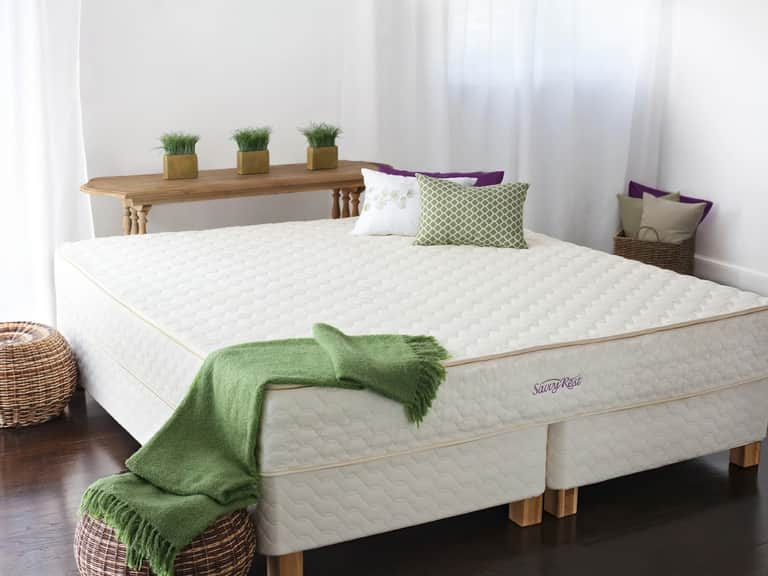
Customization can help when preferences differ across a bed. For example, the Savvy Rest Serenity Latex Mattress uses three configurable latex layers and offers different firmness choices by side in Queen and King sizes. It is a layered latex mattress rather than a coil hybrid, but it illustrates why construction details matter: a sleeper can adjust the arrangement of materials instead of treating firmness as an all-or-nothing choice. Confirm the available configuration and terms directly before making a decision.
Temperature: airflow is only part of the story
Sleep temperature depends on more than the mattress. Room conditions, pajamas, bedding, humidity and a person’s own physiology all play a role. Still, materials and construction can influence how heat and moisture move near the body.
An open coil structure can leave space within the support core for air movement. That does not mean every coil mattress sleeps cool: dense comfort layers, a close-fitting cover or a warm bedroom can change the overall experience. Conversely, foam is not one uniform material. Formulation, density, thickness and perforation affect how a particular foam behaves, so broad claims about an entire category should be treated cautiously.
Latex often feels buoyant and less enveloping than slow-response memory foam. Its surface response may help some sleepers feel less surrounded by the mattress, although “cool” remains a personal judgment. Wool and cotton can help manage moisture in the bedding system, but natural fibers are not climate control. Their contribution depends on how they are used and what lies beneath them.
If you tend to overheat, assess the entire sleep setup. Consider the mattress cover, sheets, blanket weight, room temperature and humidity together. A breathable mattress can help, but no material can guarantee that every sleeper will remain comfortable in every room and season.
Natural and organic materials: read the specifics
Natural and organic are not interchangeable terms. “Natural” may describe a material’s origin, but by itself it does not establish how that material was grown, processed or tested. “Organic” claims should identify the certified component and the relevant standard. Certification can make claims easier to evaluate, but it is important to understand its scope: a certificate for cotton does not automatically certify latex, adhesives, coils or the finished mattress as a whole.
Look for clear explanations of material composition, component origins and certification names. Ask whether a standard applies to raw material, processing or the finished product. If a seller uses terms such as chemical-free, toxin-free or hypoallergenic, seek precise supporting information rather than treating broad marketing language as proof of a specific health outcome.
These questions are especially relevant for shoppers choosing a bed for a sensitive household. Individual sensitivities vary, and no label can establish how every person will respond. Detailed specifications, transparent care guidance and an opportunity to understand the return terms offer a more useful basis for comparison than a long list of reassuring adjectives.
How to compare construction and feel
A specification sheet is a map, not a full sensory experience. Where possible, test the mattress in a position and for a duration that reflect how you sleep. Notice whether pressure builds at the shoulder or hip, whether the middle of the body feels supported, and how easy it is to turn over. A brief sit on the edge tells you something about edge feel, but not everything about the center of the bed.
When comparing options, use the same questions for each model:
- What materials make up the comfort layers, transition and support core?
- Does the construction use coils, latex or both, and how are those elements arranged?
- Which components carry organic or other material certifications?
- How does the mattress feel in your usual sleep position, including when you change positions?
- What are the trial, return, exchange and warranty conditions, and are there fees or exclusions?
- What foundation is required, and does the mattress need to be rotated or cared for in a particular way?
A firmness number can help compare products within one maker’s range, but it is not a universal measurement. One brand’s medium may feel different from another’s. Descriptions such as “plush,” “medium” and “firm” are most useful when read alongside the layer details and tested against your own comfort.
Care affects the life of the mattress
A mattress is a substantial household item, and its lifespan depends on construction, use, foundation and maintenance. Follow the manufacturer’s instructions before rotating, flipping or cleaning it. Some mattresses are designed for rotation only; others have a defined top and bottom and should not be flipped. Avoid assuming that a removable-looking cover is machine washable.
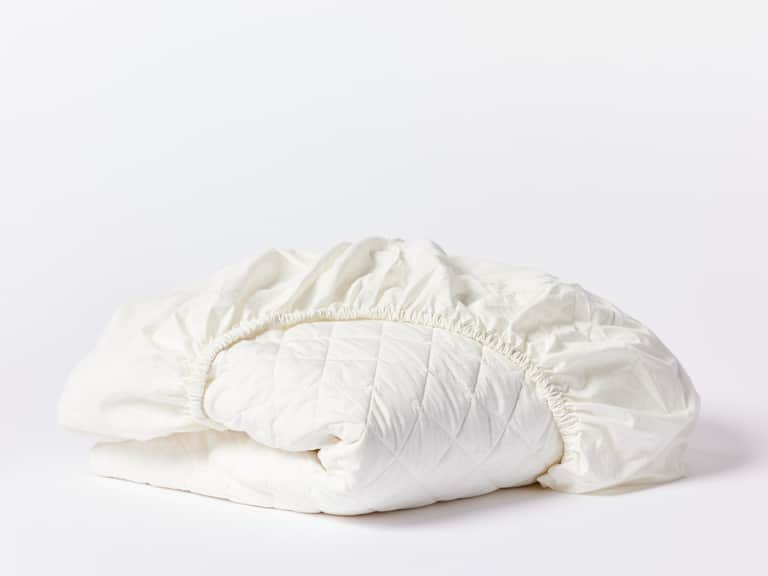
A suitable mattress protector or pad can help shield the sleep surface from ordinary spills, perspiration and wear. It should fit securely without bunching or changing the feel more than you want. For an organic-cotton option, the Organic Cotton Mattress Pad is made with 100% organic cotton, has two-inch quilted squares and 15-inch deep pockets, and is described as GOTS and Made Safe certified. Its care instructions call for a cold, gentle machine wash and low tumble drying. A pad is bedding, not a substitute for the mattress’s support layers or a guarantee of a particular temperature outcome.
Use a stable foundation compatible with the mattress design, and keep the room reasonably dry and ventilated. If a spill occurs, act according to the care label rather than applying unapproved cleaners or excessive moisture. Regular attention is less dramatic than a new-material claim, but it can protect the surface and help preserve the comfort you chose.
A practical decision framework
Start with the problem you are trying to solve. Is the existing bed too firm at the shoulders? Does it sag in the middle? Do you wake feeling too warm? Are two sleepers looking for different firmness levels? A clear priority makes it easier to distinguish a meaningful construction feature from a persuasive label.
- Define your comfort needs. Record your usual sleep positions, pressure-sensitive areas and preferred surface feel. If two people share the bed, note where their preferences differ.
- Study the layer diagram. Identify the cover, comfort materials, transition layers and support core. Ask for missing details instead of inferring them from the word hybrid.
- Verify material claims. Find out exactly which components are certified and what the certification covers. Separate documented facts from broad environmental or health promises.
- Assess temperature as a system. Consider airflow, surface feel, bedding and room conditions together. No single fiber or core determines the whole night.
- Read the policies before purchase. Trial periods, exchanges, returns, delivery, setup and warranty exclusions can materially affect the experience of choosing a mattress.
This process does not produce one universally correct bed. It produces a more informed match between a particular construction and a particular sleeper. That is the more realistic goal.
Common assumptions worth questioning
“Organic means the whole mattress is organic.” Not necessarily. Certification may apply to particular materials or stages of production, so check the scope.
“More layers mean more comfort.” Layer count alone does not establish quality or suitability. Materials, thickness, resilience and how layers work together are more telling.
“A firmer mattress is always more supportive.” Firmness and support describe different qualities. A mattress can feel firm yet create uncomfortable pressure, or feel cushioned while maintaining alignment.
“Natural materials always sleep cooler.” Materials matter, but the whole construction and the sleep environment matter too. Individual experience varies, and absolute promises should be viewed skeptically.
The bottom line
Organic hybrid beds bring together materials that may serve distinct purposes: cushioning, resilience, structural support and moisture management. Their benefits are not inherent in a category name. They emerge from the way the layers are designed and from how that design fits a sleeper’s body, habits and room.
Compare the actual construction, test the feel where possible, verify certifications and understand care and return terms. A thoughtful choice is less about finding the most impressive label than finding a bed whose support and temperature characteristics make sense for the person who will sleep on it. In the end, the layers matter—but so does the life lived above them.